
So, you’re looking at finishing your walls and ceilings and you’ve heard about plastering and dry lining. It can be a bit confusing trying to figure out which one is better, right? They both get the job done, but they do it in pretty different ways. We’re going to break down plastering vs dry lining to see which one might be the best fit for your next project, especially when you’re thinking about how much time and money you want to spend.
Key Takeaways
Dry lining is generally faster to install than traditional plastering because it involves attaching pre-made boards, saving significant time on site and reducing labour costs.
Plastering offers a more durable, harder finish that is less prone to damage, while dry lining can be more susceptible to dents and knocks.
While plastering can be more expensive upfront due to skilled labour and longer drying times, it provides superior sound and fire resistance naturally.
Dry lining is often more budget-friendly due to quicker installation and lower labour requirements, making it a popular choice for renovations and new builds where speed is a factor.
The choice between plastering vs dry lining depends heavily on project specifics: consider your budget, timeline, desired aesthetic, and performance needs like insulation and soundproofing.
Understanding The Core Differences: Plastering vs Dry Lining
When you’re looking at finishing the walls and ceilings in your home, two main methods usually come up: traditional wet plastering and modern dry lining. They both aim to give you a smooth surface ready for paint or wallpaper, but they get there in pretty different ways. It’s not just about how they look when they’re done; the whole process, from start to finish, has its own set of pros and cons.
The Traditional Appeal Of Wet Plastering
Wet plastering is what folks have been doing for ages. It involves applying layers of plaster – usually gypsum, lime, or cement-based mixes – directly onto the wall surface, often over a base like lath or brick. It’s a skilled job, requiring a good eye and a steady hand to get that perfectly smooth, monolithic finish. This method creates a really solid, durable surface that feels substantial. It’s known for its ability to handle curves and intricate details, giving spaces a classic, high-end feel. Plus, plaster naturally offers some decent sound dampening and fire resistance, which are big pluses for comfort and safety.
The Modern Efficiency Of Dry Lining
Dry lining, on the other hand, is a bit more of a modern approach. It’s essentially attaching pre-made boards, most commonly plasterboard (also called drywall or gypsum board), to the wall structure. These boards are then taped at the seams and skimmed with a thin layer of plaster or joint compound to hide the joints and screw heads. It’s a much faster process because you’re not dealing with thick layers of wet material that need to dry. It’s become super popular in new builds and renovations because it’s quicker and often less messy than traditional plastering. You get a flat, uniform surface that’s ready for decoration pretty much straight away.
Key Distinctions In Installation Processes
The way these two methods are put up is where a lot of the differences lie. Wet plastering is a wet trade; you’re mixing and applying materials that need time to cure and dry. This can take days, or even weeks, depending on the thickness and environmental conditions. It’s a multi-coat process, with each layer needing to set before the next can go on. Dry lining is a dry trade. You’re screwing or nailing boards to studs or battens, and then the finishing involves jointing compounds that dry much faster. This means you can often move on to painting or wallpapering within a day or two of the boards being up, rather than waiting for plaster to fully dry out. This speed is a major factor for many projects.
Here’s a quick rundown of how they stack up:
Wet Plastering: Multi-layer application, requires significant drying time between coats, skilled labour intensive, creates a monolithic, solid finish.
Dry Lining: Board attachment followed by jointing, much faster installation, less dependent on drying times, can be more DIY-friendly, results in a flat, panelled finish.
The choice between plastering and dry lining isn’t just about aesthetics; it significantly impacts your project’s timeline, labour costs, and even the long-term performance of your walls. Understanding these core differences is the first step to making the right decision for your specific needs.
Evaluating Project Timelines: Which Method Is Faster?
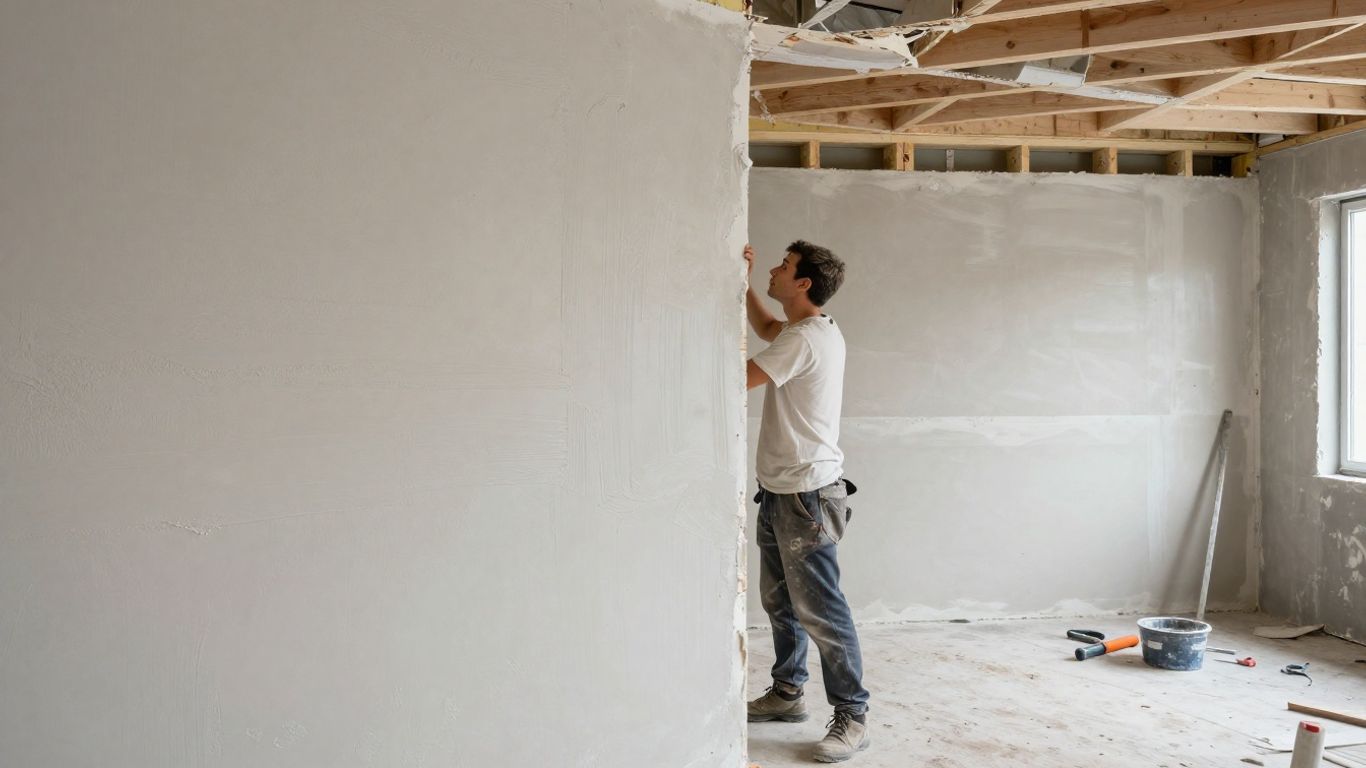
When you’re looking at a renovation or new build, time is often just as important as money. Nobody wants a project dragging on longer than it needs to, right? So, when it comes to plastering versus dry lining, which one actually gets the job done quicker?
Dry Lining’s Speed Advantage
Let’s cut to the chase: dry lining is generally the faster option. Think about it – you’re essentially hanging pre-made boards onto the walls or ceiling. This process is pretty straightforward and can be done relatively quickly, especially by experienced teams. The biggest time saver with dry lining is that you don’t have the extensive drying times associated with wet plaster. Once the boards are up and the joints are taped and filled, you can often move on to painting or decorating much sooner.
Plastering’s Time-Intensive Nature
Traditional wet plastering, on the other hand, is a multi-stage process. You’ve got the scratch coat, the brown coat, and then the final skim coat. Each layer needs time to set and dry before the next can be applied. This isn’t a quick job. It requires patience and a good understanding of the materials. Plus, the whole process can be quite messy, which might mean more time spent on cleanup between stages.
Impact Of Drying Times On Project Schedules
The real kicker with plastering is the drying time. Depending on the thickness of the plaster, the humidity, and the temperature, a plastered wall can take days, or even weeks, to fully dry out. This means any subsequent work, like painting, wallpapering, or even installing fixtures, has to wait. This extended waiting period can significantly push back your project completion date. Dry lining bypasses most of this waiting game, allowing for a much more streamlined schedule. It’s a big reason why dry lining has become so popular for projects that need to be finished on a tight deadline.
Here’s a quick look at the typical time differences:
Stage | Dry Lining (Approx. Time) | Wet Plastering (Approx. Time) | Notes |
|---|---|---|---|
Installation | 1-2 days | 2-5 days | Varies by room size and complexity |
Joint Filling/Taping | 1 day | N/A | Part of the installation for dry lining |
Drying Time | Hours (for joint filler) | Days to Weeks | Critical factor for plastering schedule |
Painting/Decorating | Can start after 1-2 days | Can start after full drying | Depends heavily on previous stage |
While plastering can offer a beautiful finish, its multi-step application and lengthy drying periods mean it’s almost always going to take longer than dry lining. This delay can have a ripple effect on the entire project timeline, impacting subsequent trades and the final handover date.
Cost Considerations: Material And Labour Expenses
When you’re figuring out the total cost for your project, it’s not just about the price tag on the materials. You’ve got to think about who’s doing the work and how long it’s going to take. These things can really change the final number.
Material Costs: Drywall Versus Wet Plaster
Let’s talk about what goes into the walls. Drywall, those big sheets of gypsum board, is generally cheaper to buy than the stuff you need for wet plaster. We’re talking maybe $10 to $15 per square meter for drywall, installed. Plaster, on the other hand, can easily jump up to $30 to $50 per square meter. That’s a pretty big difference, and it’s not just the powder or the mix; it’s also about the skill needed to put it on right.
Labour Expenses: Skilled Trades Versus DIY
This is where plastering really starts to cost more. Plastering is a craft. You need someone who’s been doing it for years to get that smooth, crack-free finish. It takes a lot of skill and time. Drywall, while it still needs care, is a lot more forgiving. Plenty of people can tackle drywall installation themselves if they’ve got the right tools and are willing to learn. If you’re paying hourly, the faster installation of drywall can save you a good chunk of money. For a 12×16 foot room, two drywall installers might finish in about an hour, but that depends on the room’s complexity, like how many corners or outlets there are. Plastering, however, involves multiple layers and drying times, making it much more labor-intensive.
Long-Term Value and Repair Costs
Now, it’s not all about the upfront cost. Plaster, even though it’s pricier to install, tends to be really durable. It can last for decades and holds up better against bumps and knocks. Drywall is cheaper to put up, but it can get dented or cracked more easily. This means you might end up paying for more repairs over time, like patching and repainting. However, fixing small drywall damage is usually pretty straightforward and can often be done in a day. Repairing plaster, especially to match the texture, can be trickier and might require a specialist. If you’re looking at the total cost over many years, the picture can change. For a general idea of renovation costs, check out this home renovation price guide.
When you’re deciding, think about the whole picture. Drywall is often the winner if you’re on a tight budget and need things done fast. But if you’re aiming for a premium feel, have the time and money, and want something that might last longer with less fuss, plaster could be worth the investment.
Aesthetic Finishes And Design Flexibility
When you’re thinking about how your walls will look and feel, the choice between plaster and drywall really comes into play. It’s not just about covering up the studs; it’s about the final vibe of your space.
Achieving A Seamless Look With Plaster
Traditional plaster has this amazing ability to create a truly monolithic surface. When it’s applied, especially with multiple coats, it dries into one solid, continuous layer. This means you don’t get those visible seams or joints that you might see with drywall panels. This lack of seams is what gives plaster its signature smooth, almost flowing appearance. It reflects light in a way that can make a room feel more luxurious and complete. Think of it like a perfectly poured concrete countertop versus a tiled one – plaster offers that unbroken, high-end finish that many people associate with quality craftsmanship. It’s particularly good for creating a rich, deep finish that feels substantial.
The Flat, Uniform Finish Of Dry Lining
Dry lining, on the other hand, is all about creating a perfectly flat and uniform surface. It’s made up of large boards that are joined together, and then the joints are taped and mudded. While this process does leave seams, when done correctly, they become virtually invisible. The result is a very clean, crisp, and even surface that’s ideal for modern aesthetics. It’s like a blank canvas. If you’re going for a minimalist look with sharp lines and a very predictable finish, drywall is often the go-to. It’s straightforward and reliable for achieving that consistent flatness across large areas.
Design Possibilities: Curves, Arches, And Textures
This is where things get really interesting, and the differences become more pronounced. Plaster is incredibly versatile when it comes to shaping. Because it’s applied wet and can be manipulated, it’s much easier to create curves, arches, and custom details. Want a rounded doorway or a curved wall? Plaster can handle that beautifully, bending to your design vision without much fuss. It’s also great for incorporating decorative mouldings or creating subtle textures that add character.
Drywall can also be used for curves and arches, but it often requires more specialized techniques, like scoring the back of the board or using flexible drywall. This can add complexity and cost to the project. While drywall is typically known for its flat finish, you can add texture to it using various compounds and techniques, like a knockdown or orange peel finish. However, achieving the same depth and fluidity as plaster, especially with complex shapes, can be more challenging.
Here’s a quick look at how they stack up for different design elements:
Curves and Arches: Plaster is generally more forgiving and natural-looking.
Sharp, Straight Lines: Drywall excels here, providing a crisp, clean edge.
Textured Finishes: Both can be textured, but plaster often offers a more integrated feel.
Decorative Mouldings: Plaster can be shaped directly, while drywall relies on applied mouldings.
When you’re planning your project, think about the overall style you’re aiming for. If your design involves a lot of organic shapes, flowing lines, or intricate architectural details, plaster might be the more suitable choice. For a clean, modern look with straight lines and a predictable finish, drywall is often the more practical option. It’s about matching the material to the desired aesthetic outcome.
Performance Factors: Durability, Insulation, And Soundproofing
Durability and Resistance to Damage
When we talk about how well walls hold up over time, plaster usually has a bit of an edge. It’s a denser material, which means it’s generally tougher and more resistant to everyday bumps and knocks. Think about a door handle hitting the wall or kids playing a bit too rough – plaster tends to shrug those off better than drywall. However, plaster isn’t invincible. It can develop cracks, especially in older homes where foundations might shift a bit or if there’s significant vibration. Water damage is also a big concern; once plaster gets soaked, it can bubble and crumble, needing a pretty involved repair.
Drywall, on the other hand, is softer. It’s more prone to dents and dings from impacts. You know, those little marks that seem to appear out of nowhere? Those are often drywall’s signature. But here’s the upside: drywall is way easier to fix. A small dent or hole can usually be patched, sanded, and painted over in a single afternoon. It’s a trade-off between initial toughness and ease of repair.
Insulation Properties for Energy Efficiency
Neither plaster nor standard drywall are standout insulators on their own. They are primarily surface finishes. However, the way they are installed can impact your home’s energy efficiency. Plaster, being a solid material, offers a slight thermal mass benefit, meaning it can absorb and release heat slowly, which can help regulate room temperature a little. But this effect is minor compared to dedicated insulation materials.
Drywall’s performance in this area really depends on what’s behind it. If you have good insulation (like fiberglass batts or spray foam) installed between your studs before the drywall goes up, your walls will be much more energy-efficient. There are also specialized drywall products, like those with added foam cores, that offer a bit more insulation value right out of the box, though these typically cost more.
Sound Dampening Capabilities
This is where plaster often shines, especially compared to basic drywall. The density of plaster naturally helps to absorb and block sound waves, making rooms feel quieter and more private. This is why older homes with plaster walls often seem to have a different acoustic quality – they tend to be less echoey and transmit less noise between rooms.
Standard drywall, being lighter and hollower (unless filled with insulation), doesn’t offer the same level of sound dampening. You might hear more through the walls. However, the game changes with specialized drywall products. You can get sound-dampening drywall boards designed specifically to reduce noise transmission. These often have a denser core or special damping layers. For really serious soundproofing needs, you might even see multiple layers of drywall installed, sometimes with a special compound in between, or a combination of drywall and dense insulation.
When thinking about performance, it’s not just about the material itself, but also how it’s installed and what other materials are used alongside it. A well-insulated wall with standard drywall can outperform a poorly insulated plastered wall in terms of energy efficiency. Similarly, specific drywall products can rival or even surpass plaster for soundproofing if that’s the main goal.
Choosing The Right Method For Your Specific Project
So, you’ve weighed the pros and cons of plastering versus dry lining, and now it’s time to figure out which one actually makes sense for your project. It’s not a one-size-fits-all situation, not by a long shot. What works for a quick flip might be a total miss for a heritage home restoration. Let’s break down when each method really shines.
When Plastering Is The Superior Choice
If you’re aiming for that old-world charm or a truly high-end feel, traditional plaster might be your best bet. Think about heritage homes; lime plaster not only looks the part but also breathes, which is often a requirement for older buildings. It’s also fantastic if you’re building something like a music room or need to really cut down on noise between rooms, as plaster has some solid sound-dampening qualities. Plaster brings a depth and smoothness that drywall just can’t replicate on its own. It’s also the go-to for intricate details, curves, and custom mouldings that give a space that bespoke, luxurious finish. If longevity and a premium aesthetic are top priorities, and you’ve got the time and budget, plaster is a strong contender.
When Dry Lining Is The Ideal Solution
Dry lining really comes into its own when speed and budget are the main drivers. If you’re on a tight deadline, like a quick renovation or a property flip, the faster installation of drywall panels is a huge advantage. It’s also generally more forgiving for DIY enthusiasts – hanging, taping, and patching drywall is often seen as more accessible than mastering plastering techniques. Dry lining is also a smart choice if you anticipate future changes or need easier access behind walls, as it’s simpler to remove and rework. Plus, it’s a great way to incorporate additional insulation for better energy efficiency. For modern builds with clean lines, or when you just need a functional, flat surface quickly, dry lining is hard to beat. You can find more details on the scopes of work for local trade contractors in the MTD Manual.
Strategic Combinations For Optimal Results
Honestly, the smartest approach often involves using both methods strategically. You don’t have to pick just one! Imagine finishing your main living areas with the luxurious feel of plaster for that wow factor, but using dry lining in utility rooms, hallways, or secondary bedrooms where practicality and cost-effectiveness are more important. This hybrid approach lets you prioritize where the premium finish and performance matter most, while still saving money and time on less critical areas. It’s about getting the best of both worlds – the aesthetic appeal and soundproofing of plaster where you want it, and the speed and ease of dry lining where it makes the most sense. This kind of planning can really make a project come together efficiently and within budget.
So, Which Wins in 2026?
Alright, so we’ve looked at both plastering and dry lining, and honestly, there’s no single ‘best’ answer for everyone. If you’re really pressed for time and trying to keep costs down, dry lining is probably your go-to. It’s quicker to put up, and you can get to painting way faster, which is a big win for tight schedules. Plus, it’s pretty good for adding a bit of insulation. On the flip side, if you’ve got a bit more wiggle room in your budget and timeline, and you’re after that super smooth, durable finish that feels really solid, traditional plastering might be more your speed. It’s a bit more of an investment upfront, but it can look and feel more premium, and it’s generally tougher. Think about what matters most for your project – speed, budget, or that high-end feel – and that’ll point you in the right direction. Sometimes, using a mix of both can even be the smartest play.
Frequently Asked Questions
What’s the main difference between plastering and dry lining?
Think of plastering like frosting a cake – it’s a wet mixture that’s spread onto the walls and dries over time. Dry lining is more like building with pre-made pieces, where you attach boards (like drywall) to the wall frame. It’s a quicker, drier process.
Which method is faster for finishing walls?
Dry lining is definitely the speedier option. Because you’re attaching boards, you can start painting or decorating much sooner. Plastering needs a lot of drying time, which can add days or even weeks to your project schedule.
Is dry lining cheaper than plastering?
Generally, dry lining costs less. The materials can be more affordable, and the installation usually takes less time, meaning lower labor costs. While plaster might last a very long time, the initial setup for dry lining is often more budget-friendly.
Can I get the same smooth look with dry lining as with plastering?
You can achieve a very smooth finish with dry lining, especially with good installation. However, traditional plastering can offer a unique, seamless look and is better for creating curves or special shapes. Dry lining tends to be flatter and more uniform.
Which is better for soundproofing and insulation?
Plaster naturally offers better sound dampening. While you can add insulation to dry lining systems to improve both sound and heat insulation, plaster has an advantage here right out of the box. Special types of drywall can also help, but it adds to the cost.
When should I choose plastering over dry lining?
Plastering is often the top choice for historic homes where you need to match the original look, or when you want a really high-end, seamless finish. It’s also great if soundproofing is a major concern. If you have more time and budget for that classic feel, plaster is a good bet.